Electrical Services in Kettering, Ohio
Delco Park Electric works on the electrical systems of homes and small businesses in Kettering and the neighboring communities of Oakwood, Centerville, Moraine, Beavercreek and southern Dayton. The work falls into five lines, from a breaker that will not stay on to a new dedicated circuit for a car charger.
Most requests begin with a symptom rather than a service name: a light that flickers, an outlet that has stopped working, a breaker that trips every evening when the dryer runs. The table and the troubleshooter below start from that point.
Each Service and the Situations It Covers
The table gives the short version of each line of work: the situations that usually lead to that kind of visit.
| Service | Typical situations | Page link |
|---|---|---|
| Repair and troubleshooting | Flickering lights, tripping breakers, dead circuits and warm outlets | Electrical Repair |
| Panel and service upgrades | An older or full panel, a new major appliance, worn breakers, surge protection | Panel Upgrades |
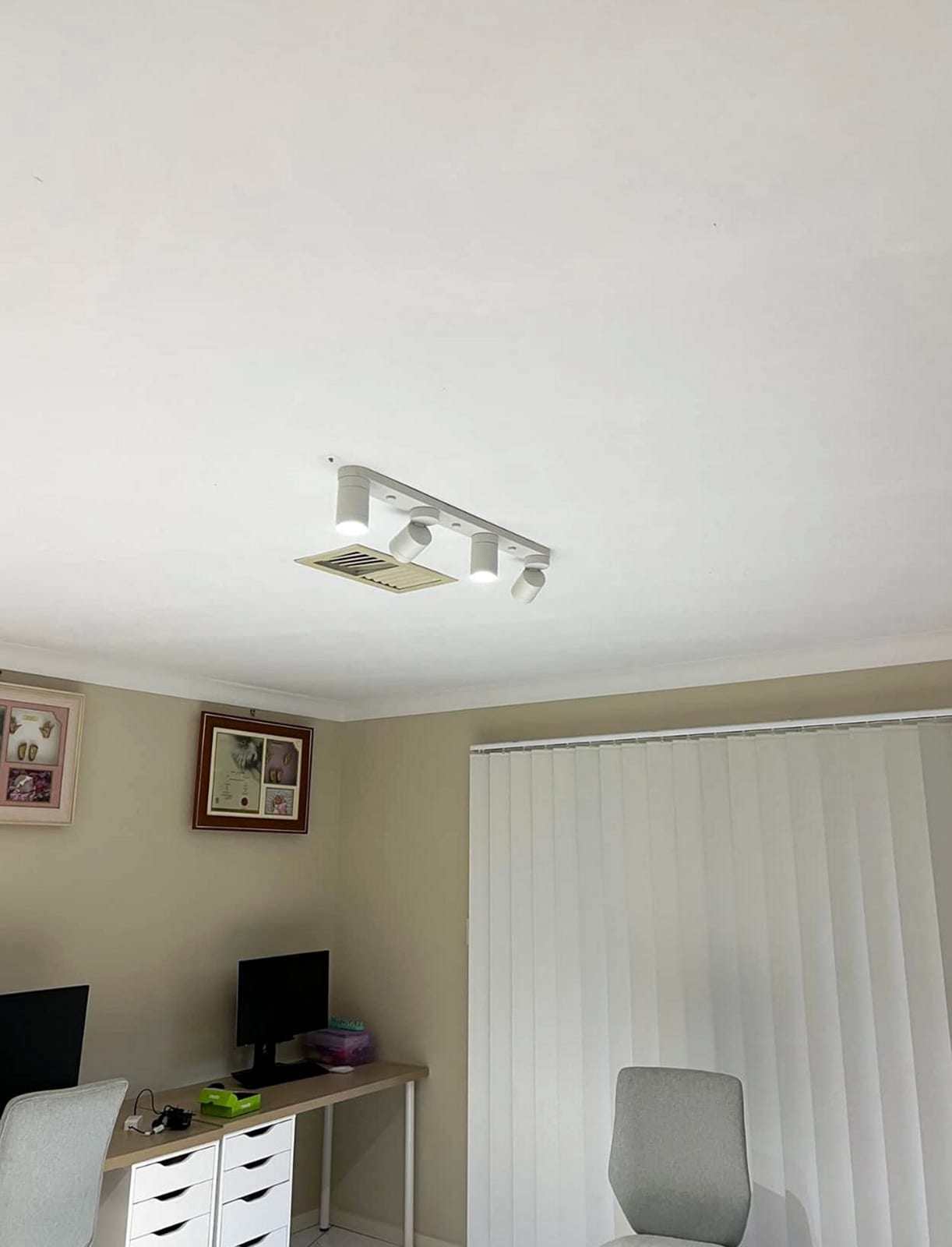
| Lighting installation | New fixtures, recessed lighting, ceiling fans, dimmers and outdoor lights | Lighting Installation |
| Outlets, switches and wiring | Added outlets, GFCI and AFCI protection, rewiring, smoke detector wiring | Outlets and Wiring |
| EV charger circuits | A dedicated Level 2 circuit in a garage or beside a driveway | EV Chargers |
Many jobs touch more than one line. A charger circuit can lead to a check of the panel’s capacity, and a room of new recessed lights may also need a new circuit or added AFCI protection. The assessment settles which work actually applies.
Matching a Symptom to the Right Service
The troubleshooter takes a symptom and where it shows up, then lists the causes an electrician would usually consider first, names the service page that covers the repair, and says whether the sign calls for a prompt phone call. It gives general causes, not a diagnosis: the actual fault is found on site, at the panel and in the wiring.
Symptom Troubleshooter
Warning Signs That Should Not Wait
Most electrical problems are an inconvenience. A few are signs of heat or arcing inside the wiring, and they should be reported promptly rather than watched:
- an outlet, a switch or a cover plate that feels warm to the touch
- a burning or hot-plastic smell with no clear source
- scorch marks or brown discoloration around an outlet, a switch or the panel
- sparks when a plug goes in or a switch is flipped
- a breaker that trips again the moment it is reset
In each case the safe first step is to stop using the circuit and switch off its breaker, provided the panel can be reached without standing in water or touching anything damaged. Resetting a breaker again and again forces current back into the fault and should be avoided. Smoke or flame is a matter for the fire department: leave the building and call 911. For everything else, a call to the office at (937) 719-8299 with a description of what was seen and where is the right next step.
Surge Protection, Generator Inlets and Smoke Detector Wiring
Several kinds of work sit inside the five service lines rather than on pages of their own. Breaker replacement belongs with panel work, and rewiring with outlets, switches and wiring. Three more deserve a word each.
Whole-House Surge Protection
A whole-house surge protective device mounts at the main panel and limits voltage spikes from nearby lightning, utility switching and large motors cycling inside the building. It covers the wiring and the hardwired equipment that a plug-in strip cannot reach, such as furnace controls, appliance circuit boards and a charger circuit. Summer thunderstorms make surges a regular concern in the Kettering area. Because the device is installed in or beside the panel, it is described with panel and service upgrades, and a panel replacement is a natural time to add it.
Generator Inlets and Transfer Switches
A portable generator connects to a building safely through an inlet on the outside wall and a transfer switch or a panel interlock that disconnects the utility before the generator feeds any circuit. That separation keeps generator power from flowing back onto the utility lines, where it can injure line workers, and keeps returning utility power away from the generator. A cord plugged into a dryer outlet bypasses that protection and is never a safe substitute. Because the inlet and the switch are wired at the panel, this work also belongs with panel upgrades.
Smoke Detector Wiring
Hardwired smoke alarms run on household current with a battery backup, and in most newer homes they are interconnected so that one alarm sounding sets off the others. Adding interconnected alarms, replacing aging hardwired units and extending alarm wiring during a renovation are covered under outlets, switches and wiring.
Work for Homes and for Small Businesses
Homes
Most of the work is in houses: older homes whose panels and circuits were sized for far fewer appliances, and newer ones where the owners want more lighting, more outlets or a charger in the garage. What homeowners usually need is gathered under residential services.
Small Businesses
Offices, shops and studios bring related needs: added outlets and dedicated circuits for equipment, better lighting over work areas, and breakers that trip under working loads. Those are gathered under small business services.
Setting a Time and Laying Out the Work
Whichever line of work applies, the first call settles the basics: what is going on, how old the building is and where the trouble shows up. A time is then set for the visit, and the work is laid out before any of it begins. The full sequence is described under How We Work.
A short description of the symptom is enough to begin. The request form takes the details, and the office can also be reached at (937) 719-8299.