
How We Work
Every electrical job at Delco Park Electric, whether a dead outlet or a new service, follows the same order: questions first, then a look at the panel and the wiring, then a plan the customer sees before any work begins. The stages that usually follow, and the safety rules and code requirements behind electrical work in Ohio, are set out below. Shorter answers to particular problems are collected under Questions.
The First Call and the Assessment
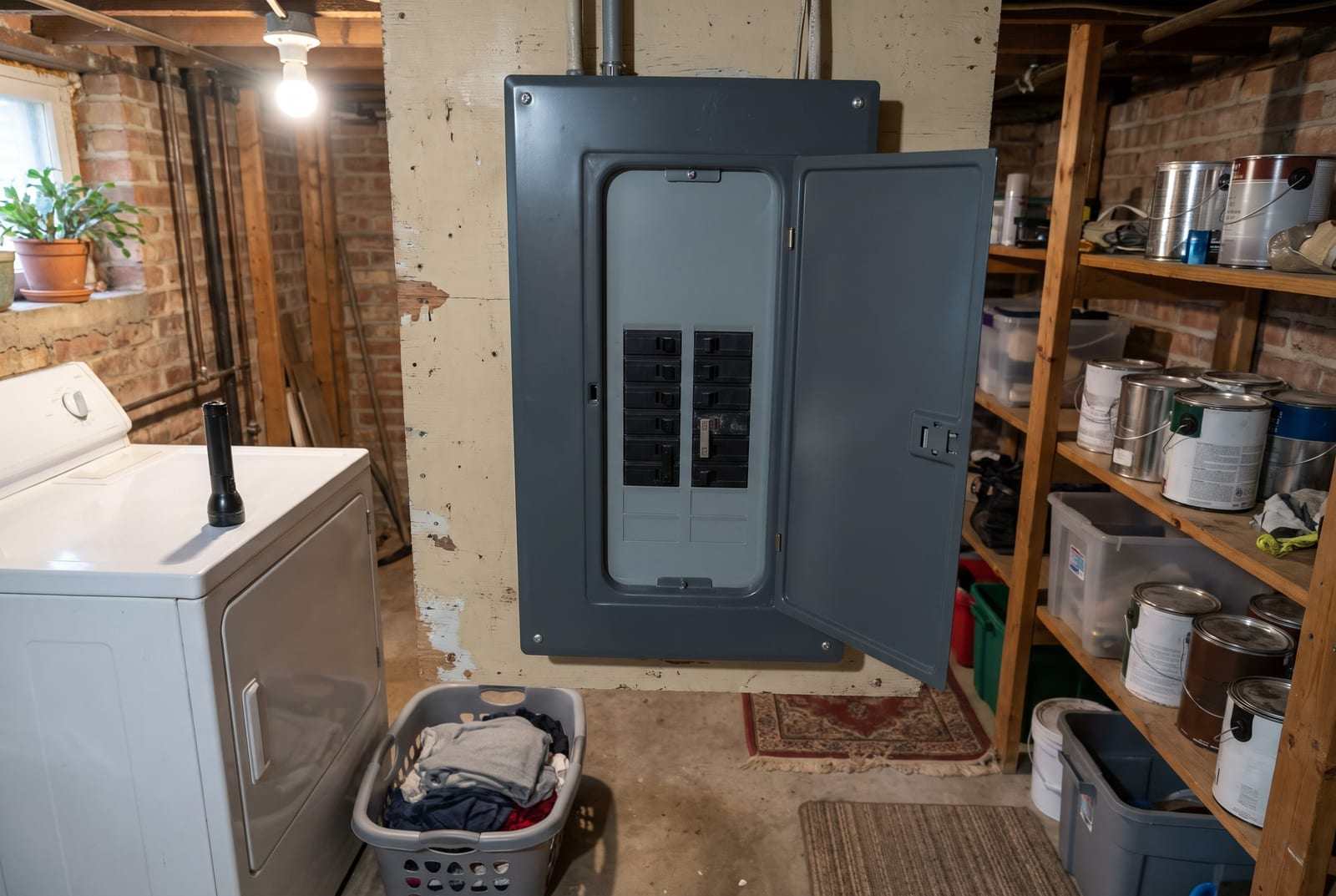
The questions asked on the first call matter: a breaker that trips in a house with original wiring suggests different causes than one in a newer home with a recently added circuit, and knowing which room or appliance is involved points the visit in the right direction. At the visit, the panel shows how the building is supplied and protected, and the wiring and the problem area show where the fault or the limit actually lies. The order is short:
- A call or a message describes what is going on.
- The office asks about the problem, the age of the building and where the trouble shows up.
- A time is set for the visit.
- Hugo Kim, the owner, comes out to look at the panel, the wiring and the area in question.
- He goes over what he found and lays out the work before any of it begins.
Stages of a Typical Electrical Job
The first four stages below follow every request. The later ones describe how electrical work generally proceeds in the trade; which of them apply depends on the job and on the rules of the local building department.
| Stage | What is looked at or done | Why it matters |
|---|---|---|
| The first call | Questions about the problem, the age of the building and where the trouble shows up | Points the visit toward the likely causes |
| Setting a time | A visit is arranged once the questions are answered | The building is seen in person rather than guessed at |
| The assessment | Hugo Kim looks at the panel, the wiring and the area in question | Locates the fault or the limit before anything is changed |
| The plan | He goes over what he found and lays out the work | The work is understood before any of it begins |
| Permit, where required | New circuits, panel replacements and service changes usually need one from the local building department | Puts the work on record for inspection |
| The work | Power is shut off and verified dead; wiring, breakers and devices are installed to the adopted code | Correct sizing and tight connections prevent heat and faults |
| Testing | Circuits are energized and checked; GFCI and AFCI devices are tripped and reset | Confirms the protection works as intended |
| Inspection, where required | An inspector reviews rough wiring before walls close and the finished work after | An independent check against the code |
Safety Rules That Apply to Electrical Work
Electrical mistakes show up as fire and shock, often long after the work is finished. These rules apply to nearly every job:
- Power is switched off at the breaker and the conductors are tested with a proven voltage tester before they are touched; a switch in the off position is never taken as proof.
- Wire and breaker sizes match: 14-gauge copper on 15 amps, 12-gauge on 20 amps, 10-gauge on 30 amps. A larger breaker on smaller wire lets the wire overheat first.
- GFCI protection where the code requires it: bathrooms, garages, basements, laundry areas, outdoors, kitchen counters and near sinks.
- AFCI protection for bedrooms, living rooms, kitchens and most other living spaces when circuits are added or extended.
- Smoke alarms in each bedroom, outside each sleeping area and on every level, interconnected in new work; carbon monoxide alarms near sleeping areas where there are fuel-burning appliances or an attached garage.
- Every splice inside a covered, accessible box sized for the conductors it holds, and a clear working space in front of the panel.
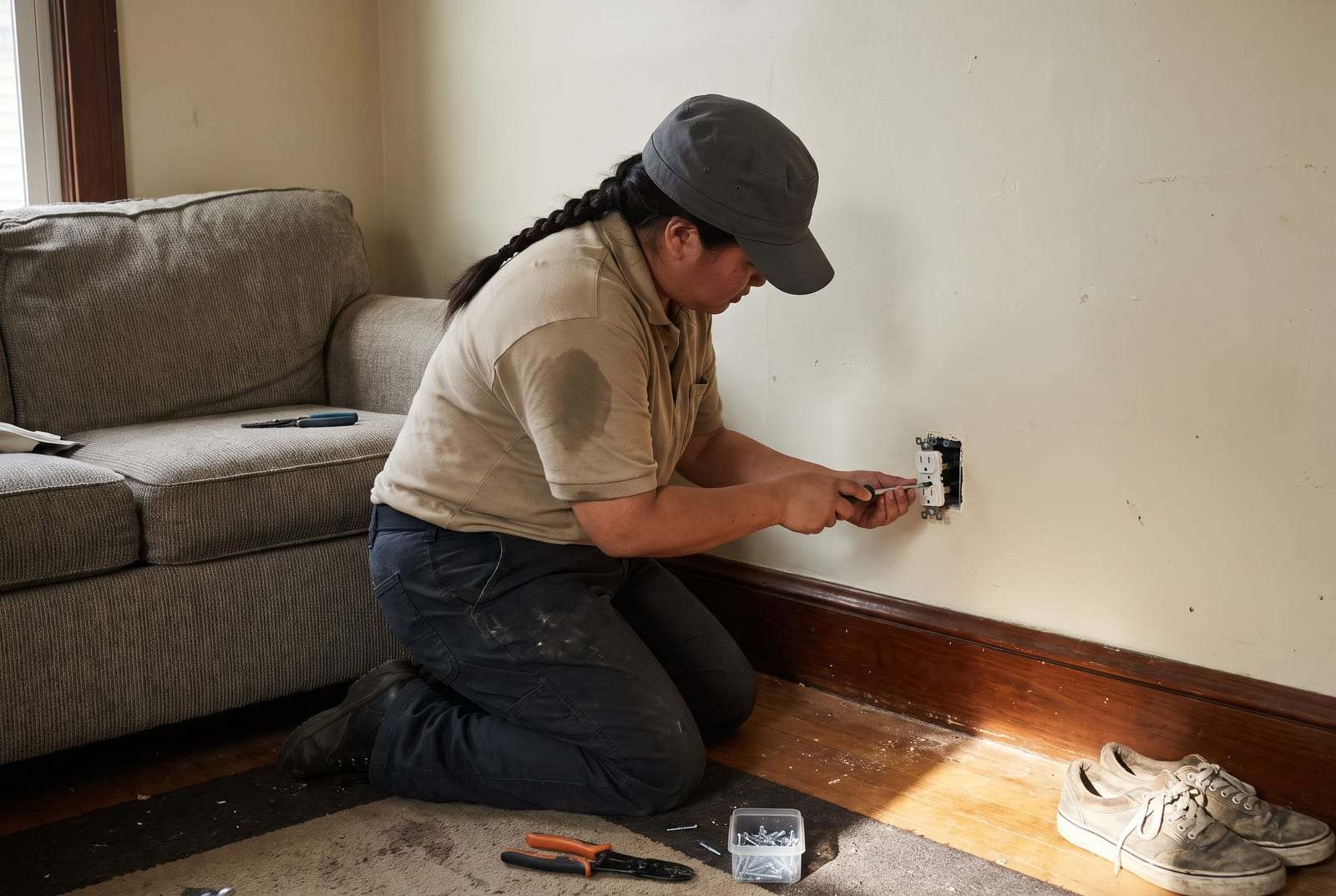
Older buildings add one more rule: what an earlier owner changed is checked rather than trusted. In Kettering houses from the 1950s–70s it is common to find a circuit extended from a buried junction box, a breaker larger than its wire, or a three-prong outlet with no ground behind it. The warning signs these leave are covered under electrical repair and troubleshooting.
The National Electrical Code in Ohio
The National Electrical Code is the national standard for safe electrical installation. It is revised every three years and has no force until a state or local government adopts it. Ohio adopts it through the Residential Code of Ohio for one-, two- and three-family dwellings and the Ohio Building Code for other buildings, each naming a specific edition, sometimes with amendments. The edition in force when the permit is issued governs the work, not the newest edition in print.
Enforcement is local. Permits are issued and inspections made by the building department with jurisdiction over the address, a city or a county office depending on where the property sits. As a rule, new circuits, service upgrades, panel replacements and generator transfer equipment need a permit. A rough-in inspection looks at cables, boxes and connections before walls are closed; a final inspection checks devices, protection and the panel. Service work also involves the electric utility, which disconnects and reconnects the supply, as described under panel and service upgrades.
When a Permit Applies and What Inspectors Check
- Does replacing an outlet or switch need a permit?
- Usually not, when the new device is the same type on the same circuit; new outlets, new circuits and panel changes usually do. Some replacements still bring current rules with them: a replaced outlet where GFCI protection is now required must have it.
- Who arranges the inspection?
- The holder of the permit schedules it with the building department. The inspector needs access to the work, the panel and any attic, basement or crawl space where wiring was run.
- Does an older house have to be brought up to current code when work is done?
- Not as a whole. Wiring that met the code when it was installed may generally remain unless it is hazardous. New work must meet the code in force, and extending an existing circuit can require arc-fault protection for it.
- What happens if work does not pass inspection?
- The inspector lists the items to correct, they are corrected and the work is inspected again. A failed item is usually specific, such as an unsecured cable, a box without a cover or a panel directory left blank.
Starting With a Description of the Problem
Every job begins the same way, with a call or a message about what is going on. Call (937) 719-8299 or send a short description of the problem and where it shows up, and the office will ask its questions and set a time.