
Residential Electrical Services
Electrical Work for Houses in Kettering and Nearby Towns
Homeowners usually need an electrician for one of three reasons: something has stopped working or is behaving oddly, the house needs more capacity than it has, or the owners want to add lighting, outlets or a charger. Delco Park Electric handles all three for houses in Kettering and the neighboring communities of Oakwood, Centerville, Moraine, Beavercreek and southern Dayton.
Problems That Show Up Around the House
Most repair calls begin with a symptom rather than a cause. The common ones are easy to recognize:
- Lights that flicker or dim, in one room or across the house
- A breaker that trips again soon after it is reset
- An outlet that has gone dead, feels warm or no longer holds a plug
- A switch that buzzes, crackles or feels warm to the touch
- A circuit that misbehaves only in certain conditions, such as wet weather
Each points to a short list of likely causes, from a loose connection to an overloaded circuit, and finding the real one is a matter of testing rather than guessing. A burning smell, scorch marks or sparking are reasons to stop using the circuit and call. Each symptom is taken further under electrical repair and troubleshooting.
Older Houses and the Panels That Serve Them
Many Kettering houses are ranch and split-level homes built in the 1950s through the 1970s. Their original panels were sized for the loads of the time, before central air conditioning, larger kitchens, finished basements and home offices were common. When the panel runs short of capacity or space, the signs include breakers that trip under ordinary use, lights that dim when a large appliance starts, and new circuits squeezed in wherever a slot could be found.
A panel upgrade replaces the panel and, where needed, increases the size of the service. Breaker replacement, whole-house surge protection, and generator inlets with transfer switches are related work done at the same point in the system. Service upgrades usually involve the utility and typically require a permit and an inspection. More on the work, and the reasons to consider it, is under panel and service upgrades.
Lighting and Ceiling Fans
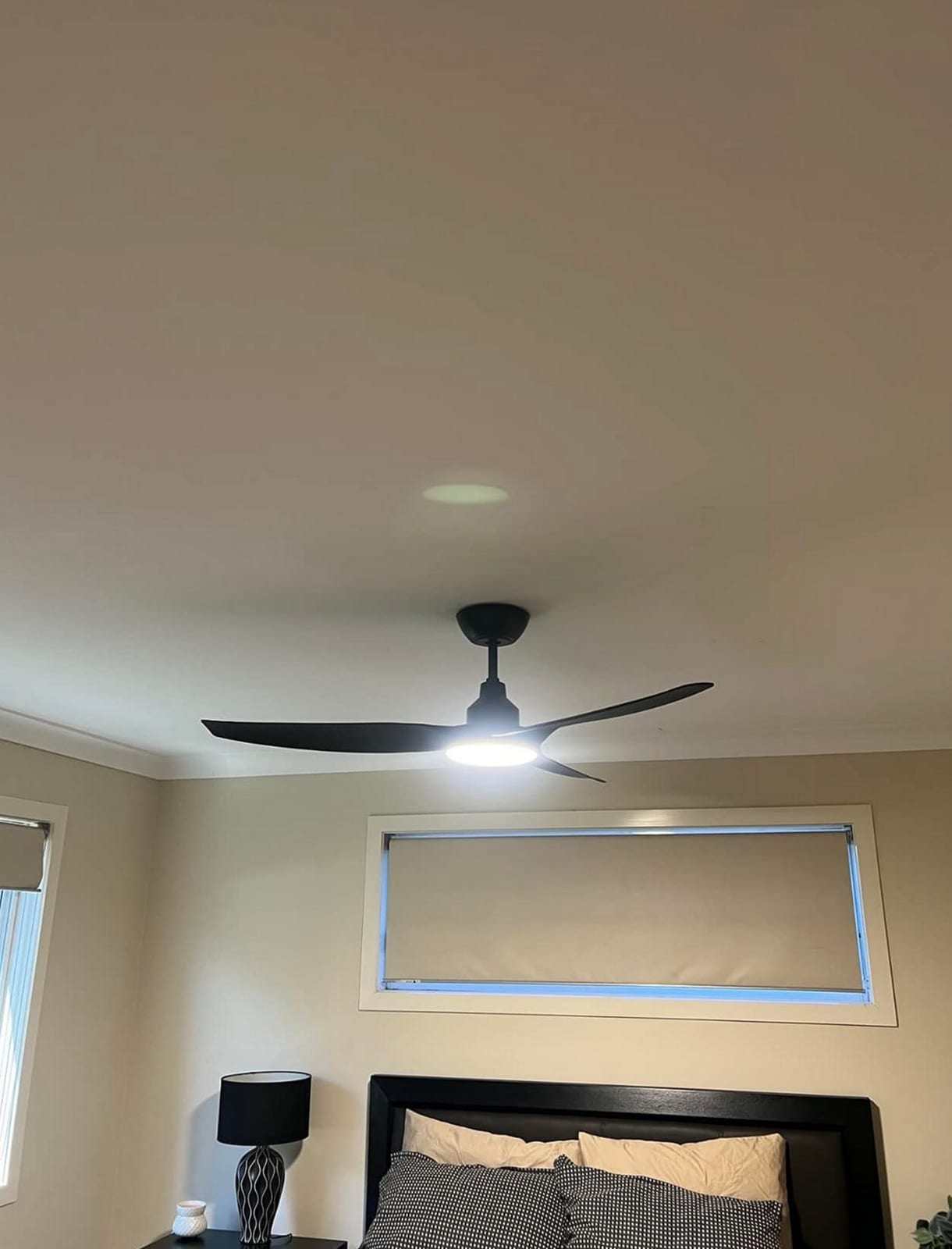
Lighting changes are among the most common household projects: recessed lighting in a kitchen or a living room, a ceiling fan where a single fixture once hung, dimmer switches, and outdoor lights by the door or along a walk. A kitchen is often lit in layers, with recessed lights for general light and pendants over an island or a counter.
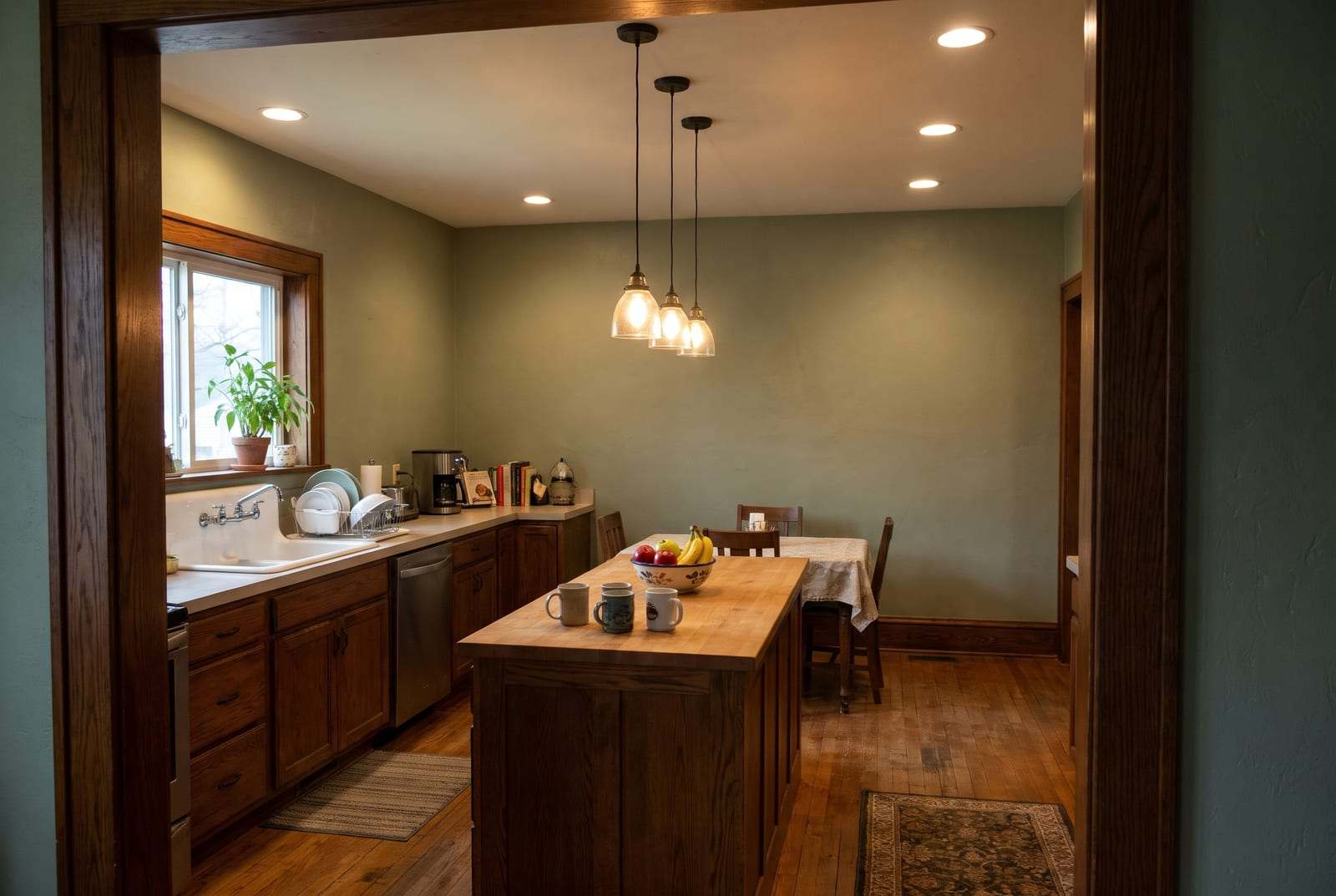
Each new light raises practical questions. The ceiling has to allow the housings, the switch has to suit the fixture, and a fan needs a box rated to carry its weight and motion. Fixtures, recessed lighting and dimmers are covered in more depth under lighting installation.
Outlets, Protection Devices and Smoke Detectors
Outlet and switch work ranges from replacing a single worn device to adding outlets where a room has too few. Protection devices are a large part of it. GFCI protection guards against shock in kitchens, bathrooms, basements, garages and outdoor locations. AFCI protection detects the arcing that can start a fire inside a wall and is required for many living-area circuits under current rules. Wired smoke detectors, connected so that one sounds the others, are part of the same work.
Older houses raise their own questions here: two-prong outlets, circuits with no ground wire, and wiring that has been extended more than once. Each is explained under outlets, switches and wiring.
Charging a Car at Home
A home EV charger is a dedicated circuit from the panel to the garage or the driveway. Planning it means checking the panel’s capacity against the new load, choosing a circuit size that suits the charger, and working out the route and the distance from the panel. In a house with an older or fully loaded panel, the charger is often the addition that brings a panel upgrade into the conversation. How a charger circuit is sized and routed is explained under EV charger installation.
Questions First, Then an Assessment at the House
Every residential job is arranged the same way:
- The homeowner calls or sends a message about what is going on.
- A few questions follow about the problem, the age of the house and where the trouble shows up.
- A time is set for the visit.
- Hugo Kim, the owner, comes out to look at the panel, the wiring and the area in question.
- He goes over what he found and lays out the work before any of it begins.
Each stage, and the safety rules behind it, is set out under How We Work.
Details Worth Noting Before the Call
- When the problem started, and whether it comes and goes
- Which rooms, outlets, fixtures or breakers are affected
- The approximate age of the house and of the panel, if known
- Any recent change, such as a new appliance, a remodel or a storm
Answers to these questions make the first conversation shorter and the visit more focused.