
Our Work
The photographs here come from jobs by Delco Park Electric. They are grouped by the type of work, each with a short note on what that kind of job involves. Panel upgrades, outlet and wiring work, and EV charger circuits are described here in words.
Lighting Installation
Lighting work ranges from a single new fixture to a ceiling laid out with a grid of recessed lights. The photographs show recessed lighting in an empty room with a herringbone floor, a four-head track light over a home office desk, and a three-blade ceiling fan with its light switched on above a bed.
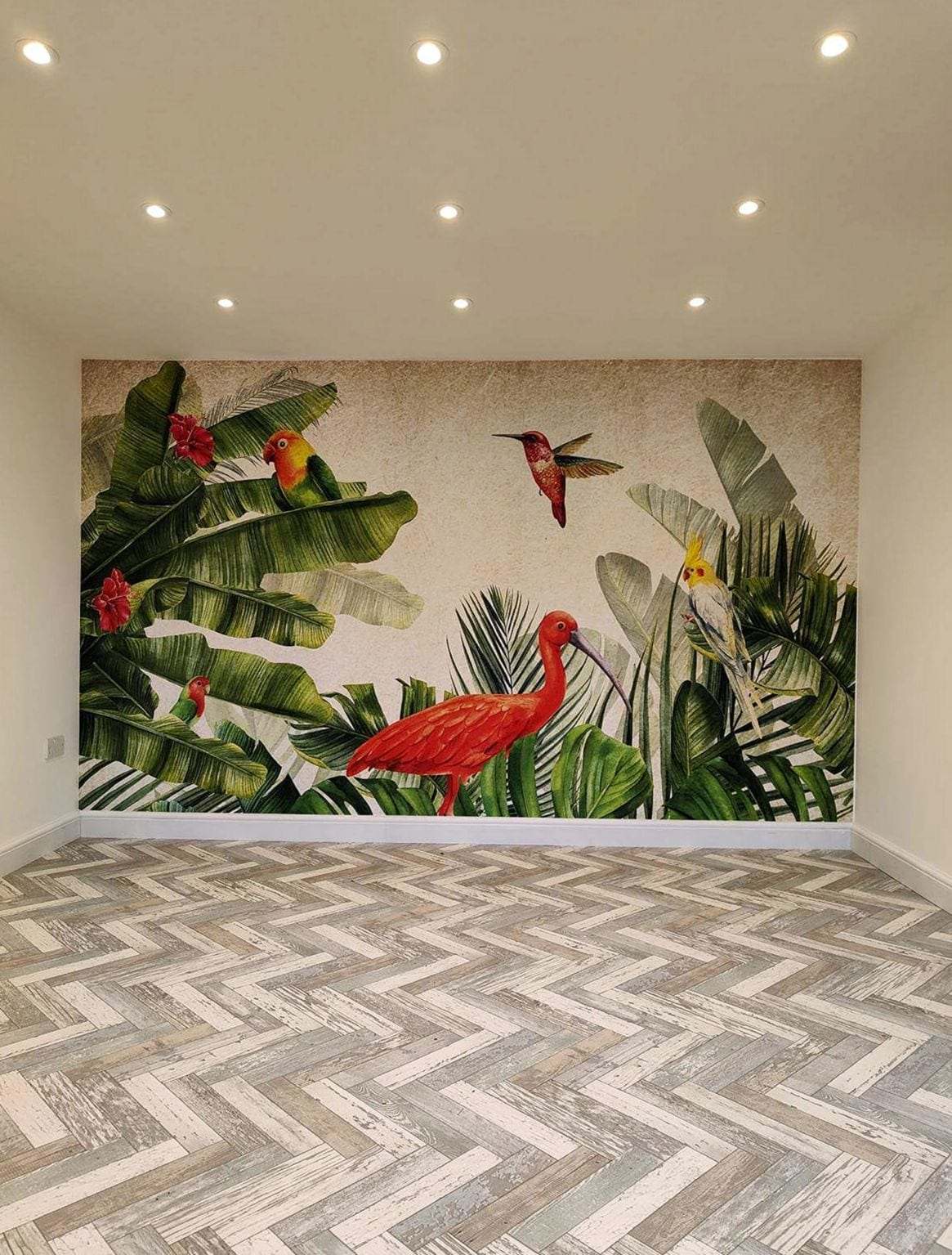
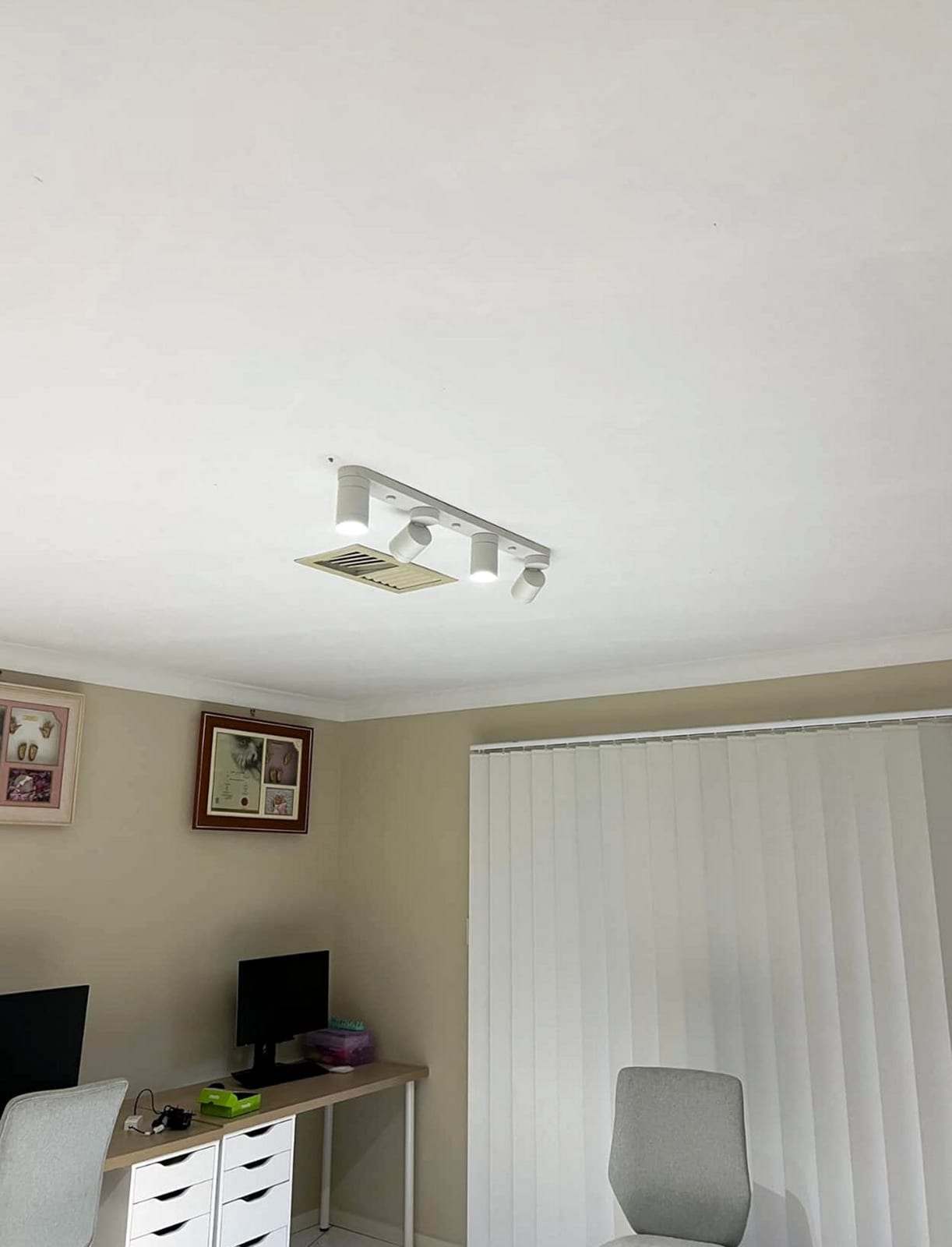
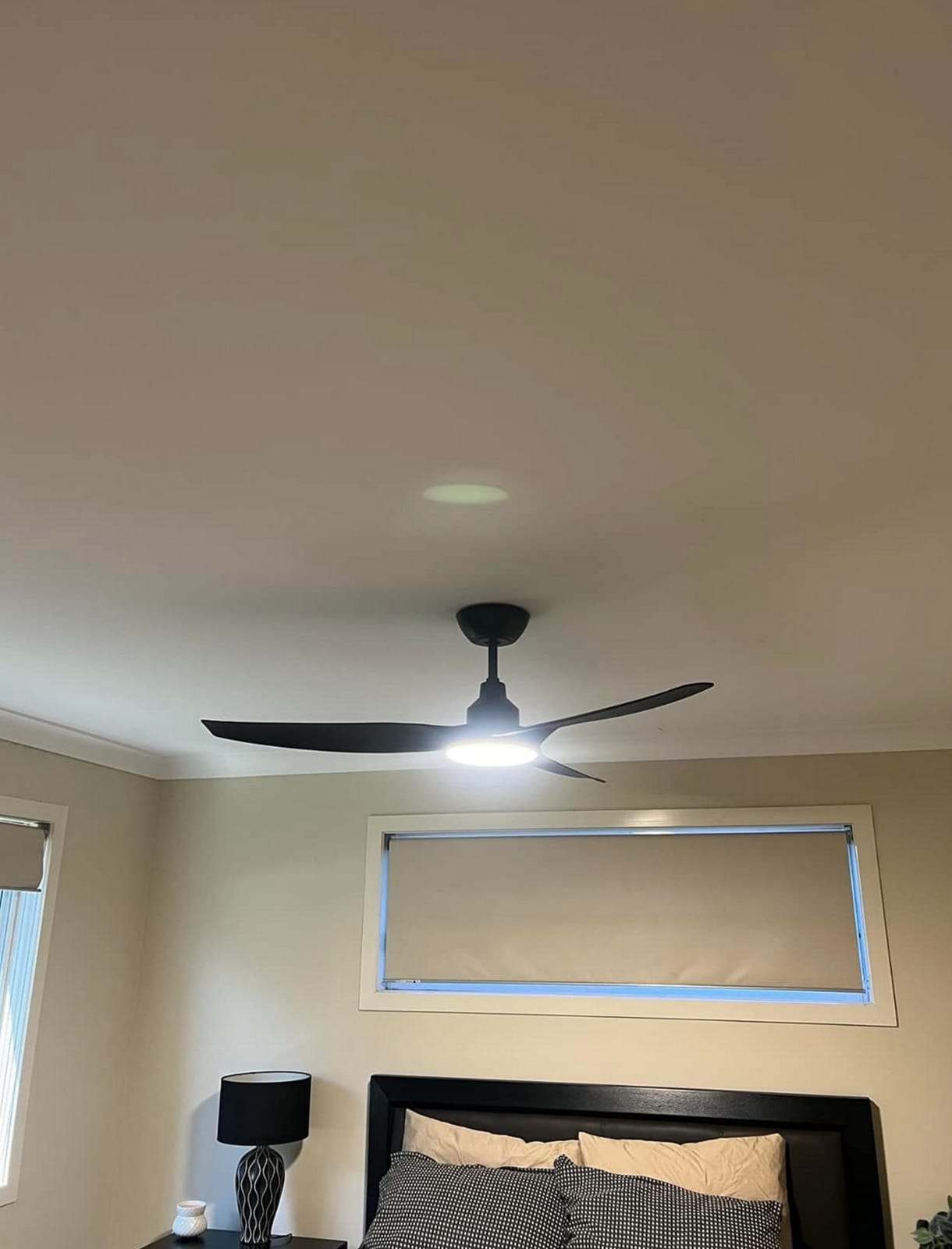
Each of these jobs starts with the same questions: where the light needs to fall, what the ceiling and the framing above it allow, and whether the existing circuit and switch can carry the new load. A grid of recessed lights has to be spaced so the light reads evenly across the room, with each housing suited to the ceiling it sits in. Track lighting lets the heads be aimed at a desk, a wall or a display. A ceiling fan adds one more requirement, since it needs a box rated to carry its weight and its motion. More on fixtures, dimmers and fans is under lighting installation.
Repairs and Troubleshooting
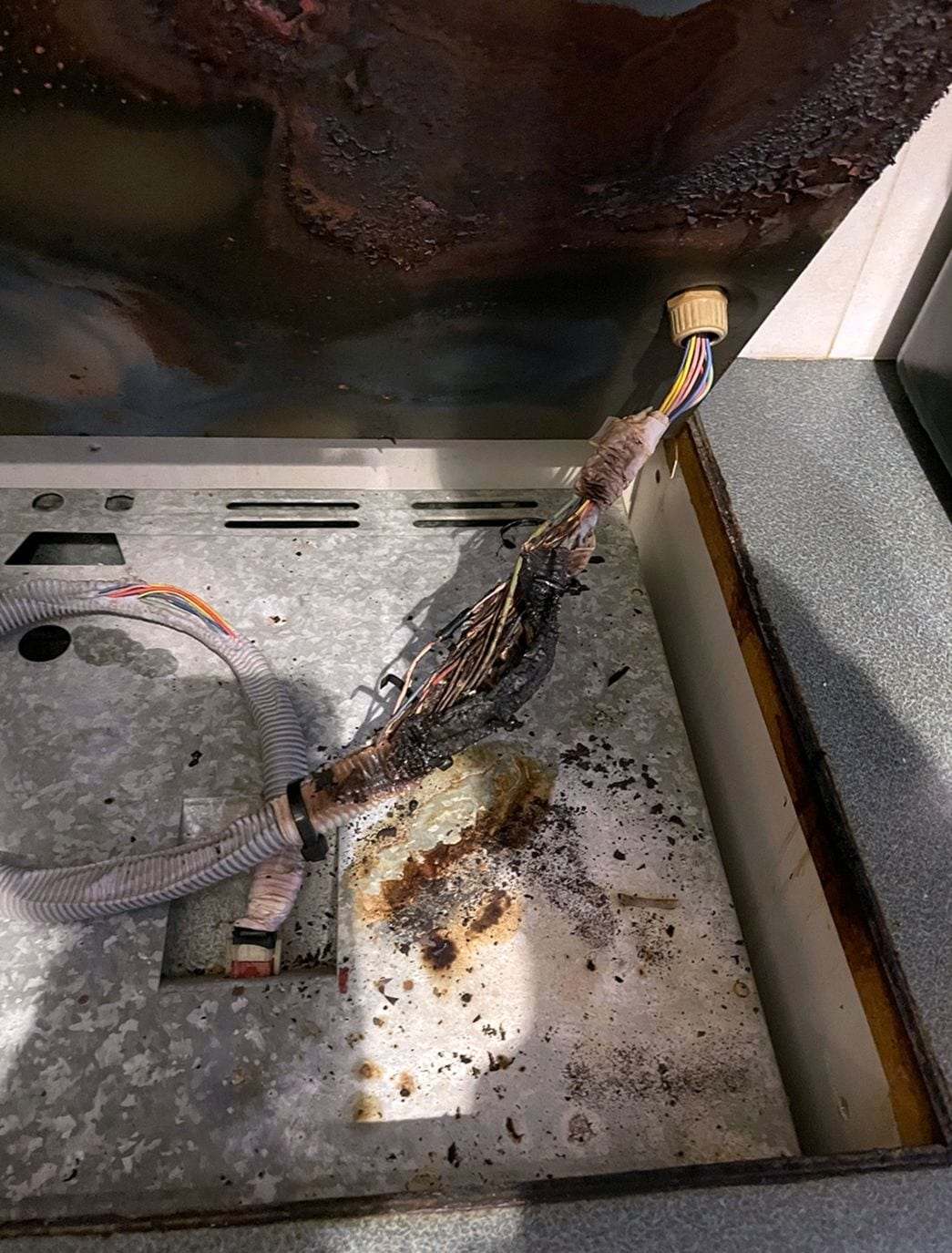
The photograph shows a wiring harness scorched and melted where the cable enters a metal appliance cabinet, with soot on the panel beside it. Damage of this kind usually begins at a single connection that is loose, overloaded or exposed to moisture. The connection heats, the insulation softens and chars, and the heat spreads along the conductors until something fails. By the time a smell or a mark is noticed, the fault has often been building for some while, which is why a connection that runs warm is treated as a problem in its own right rather than a curiosity. Finding the original point of failure matters as much as replacing the damaged section, since a new cable on an old loose terminal will fail the same way.
Repair work covers flickering lights, breakers that trip, circuits that have gone dead, and outlets or switches that run warm, buzz or no longer hold a plug. Many of these faults give warning before they cause damage. A burning smell, scorch marks or a warm cover plate are reasons to stop using the circuit and call. The common symptoms, with a safe first step for each, are listed under electrical repair and troubleshooting.
Panel Upgrades
Panel work includes replacing worn or undersized panels, replacing breakers, increasing the size of the electrical service and adding whole-house surge protection. Generator inlets and transfer switches belong to the same family of work, since both connect at the panel and decide which circuits a generator can feed. A service upgrade usually involves the meter base and coordination with the utility, and it typically requires a permit and an inspection. What an upgrade involves, and when one is worth considering, is set out under panel and service upgrades.
Outlets and Wiring
Outlet and wiring jobs range from replacing a single switch to rewiring part of a building. They include outlet and switch repair, added outlets, GFCI protection in kitchens, bathrooms, basements, garages and outdoor locations, AFCI protection for living-area circuits, and the wiring for smoke detectors. In older houses this work often begins with two-prong outlets and circuits that have no ground wire. Each of these is taken in turn under outlets, switches and wiring.
EV Chargers
An EV charger installation is mainly a circuit job. The panel’s capacity is checked against the new load, a circuit of the right size is chosen for the charger, and a route is planned from the panel to the garage or the driveway. Distance matters, since a longer run can call for heavier wire. The planning of a charger circuit, with a sizing guide, is covered under EV charger installation.
Arranging Work Like This
For lighting, repairs or any of the other work shown here, the first step is a call or a message describing the job and the building. The request page takes the details.