
Panel and Service Upgrades in Kettering
What a Panel or Service Upgrade Involves
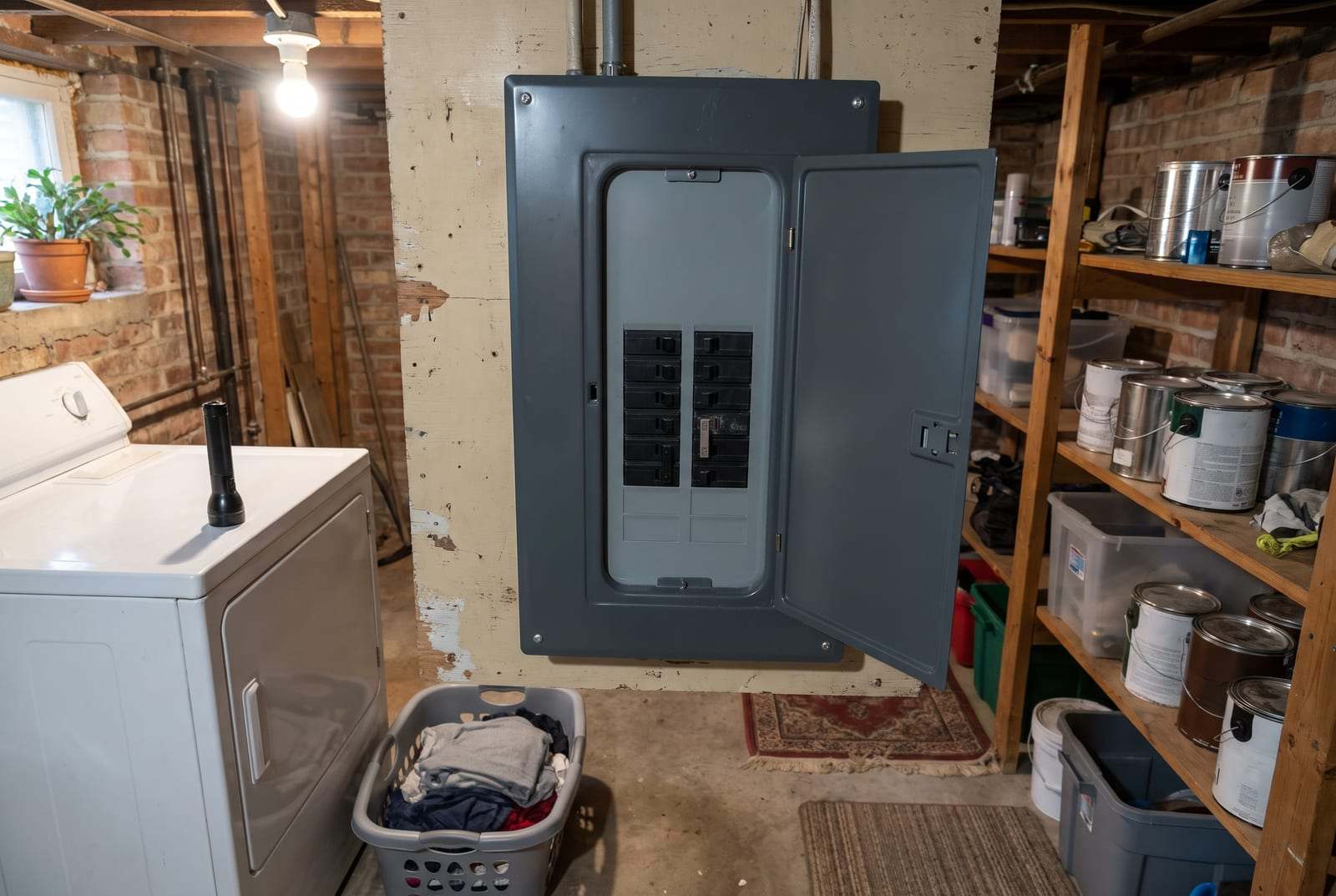
The electrical panel divides the power coming into a building among its circuits, and its main breaker caps how much the building can draw at once. A panel upgrade can mean two different jobs. A panel replacement swaps a worn, damaged or outdated panel for a new one at the same capacity. A service upgrade raises the capacity itself, commonly from 60 or 100 amps to 150 or 200 amps, and changes more than the panel.
The Parts of a Service Upgrade
- Service size. The amperage rating that the service conductors, the meter base and the main breaker are all sized to.
- The panel. A new panel with a main breaker and enough spaces for the existing circuits, plus room for the ones planned next.
- Breakers. Breakers matched to each circuit’s wire size, with AFCI and GFCI protection where the code calls for it.
- Meter base and service entrance. A larger service usually needs a new meter base and new service entrance cable or mast.
- Grounding and bonding. Ground rods, the bond to the water piping and the bonding of gas piping, brought up to current requirements.
- Utility coordination. The utility disconnects the service before the changeover and reconnects it afterward, and in most places an inspection must pass before power is restored.
Many Kettering ranch and split-level homes from the 1950s–70s were built with 60-amp or 100-amp service, often with the panel in the basement. That was enough for the appliances of the time. Central air, an electric range and dryer, a heat pump or an EV charger can push the same service past its limit.
Panel Capacity and Typical Uses
The table gives general trade guidance on what each common service size supports. The answer for a particular building comes from a load calculation under the National Electrical Code, which adds up lighting, outlets, appliances, heating and cooling instead of simply totaling the breaker ratings in the panel.
| Service size in amps | Suited to | Typical added loads |
|---|---|---|
| 60 amps | Small older homes with gas heat and few large appliances | Little or no room for a new major load |
| 100 amps | Modest homes with gas heat, gas cooking and one central air unit | An electric dryer or range, after a load calculation |
| 150 amps | Mid-size homes with central air and some electric appliances | A Level 2 charger or a heat pump, depending on the existing load |
| 200 amps | Larger homes, or homes with electric heat, cooking and drying | An EV charger, a hot tub and a heat pump, often together |
Breaker Replacement
Not every panel problem calls for a new panel. A single breaker that has worn out, trips below its rating or runs hot can be replaced on its own, provided the replacement is a type listed for that panel; a breaker that merely fits the bus is not enough. Breaker replacement is also how AFCI or GFCI protection is added to an existing circuit. A breaker that keeps tripping may be reporting a fault on the circuit rather than wear, and tracing that belongs with electrical repair and troubleshooting.
Panel Work, Surge Protection and Generator Connections
At a panel, the assessment turns on four questions: its condition, its capacity, the circuits it carries and the loads planned for it. The answers decide whether a breaker replacement, a new panel or a larger service is the sound plan, and that plan is laid out before any work begins. The stages of a job are described under How We Work.
Reasons to Consider an Upgrade
- Breakers that trip often under ordinary household loads
- Plans for a major appliance: an EV charger, a heat pump, an electric range or dryer, or a hot tub
- An older panel or a fuse box, especially on 60-amp service
- No open spaces left, or several circuits doubled up on single breakers
- Signs of heat, rust or water inside the panel or on the breakers
- A renovation, an addition or a finished basement that adds circuits
- A home inspection or an insurer that has flagged the panel
Whole-House Surge Protection
A surge protective device at the panel limits voltage spikes before they reach the branch circuits. It protects furnace and air conditioner controls, appliance circuit boards and hardwired equipment that a plug-in strip cannot cover. The device is usually installed in a spare breaker space or beside the panel, which makes a panel replacement a natural time to add one. Recent editions of the National Electrical Code call for surge protection when a dwelling’s service is replaced; whether that applies depends on the edition in force locally.
Generator Inlets and Transfer Switches
A portable generator connects through an inlet mounted on the outside wall, a cord to the generator, and either a transfer switch or a listed interlock on the main panel. Both make it impossible for the generator and the utility to feed the building at the same time, which protects line workers from backfeed and protects the generator when utility power returns. A transfer switch carries a chosen set of circuits; an interlock uses the existing panel and leaves the household to choose which breakers to run within the generator’s capacity. Sizing starts with the loads that must run during an outage: a sump pump, the furnace blower, the refrigerator and a few lights make a common list.
Questions About Panels, Permits and Capacity
- Does a panel upgrade need a permit?
- In most places, yes. Replacing a panel or increasing the service size is work that local building departments generally require a permit for, followed by an inspection. Requirements vary between cities and counties, so the local building department is the authority for a particular address.
- Who decides when the power comes back on?
- The electric utility controls the meter and the service drop. On a service upgrade the utility usually disconnects the service before the work and reconnects it once the inspection has passed. In some jurisdictions the building department notifies the utility directly when the inspection is approved.
- Is a fuse box unsafe?
- Not by itself. Fuses protect circuits well when they are the right size. The trouble with most remaining fuse boxes is that they are small for modern loads, that an oversized fuse is easy to put in by mistake, and that their age means worn connections. Some insurers and home buyers also ask about them.
- Can an EV charger be added without a larger service?
- Often, yes. A load calculation shows how much spare capacity the existing service has. Where the margin is small, a smaller charger circuit or a load management device that limits charging while other large loads run can avoid a service upgrade. The planning is covered in more detail under EV charger installation.
A panel upgrade is usually planned around what the building needs next: a charger, a heat pump, a finished basement or simply breakers that stop tripping. The request form takes the details, and the office can be reached at (937) 719-8299.