
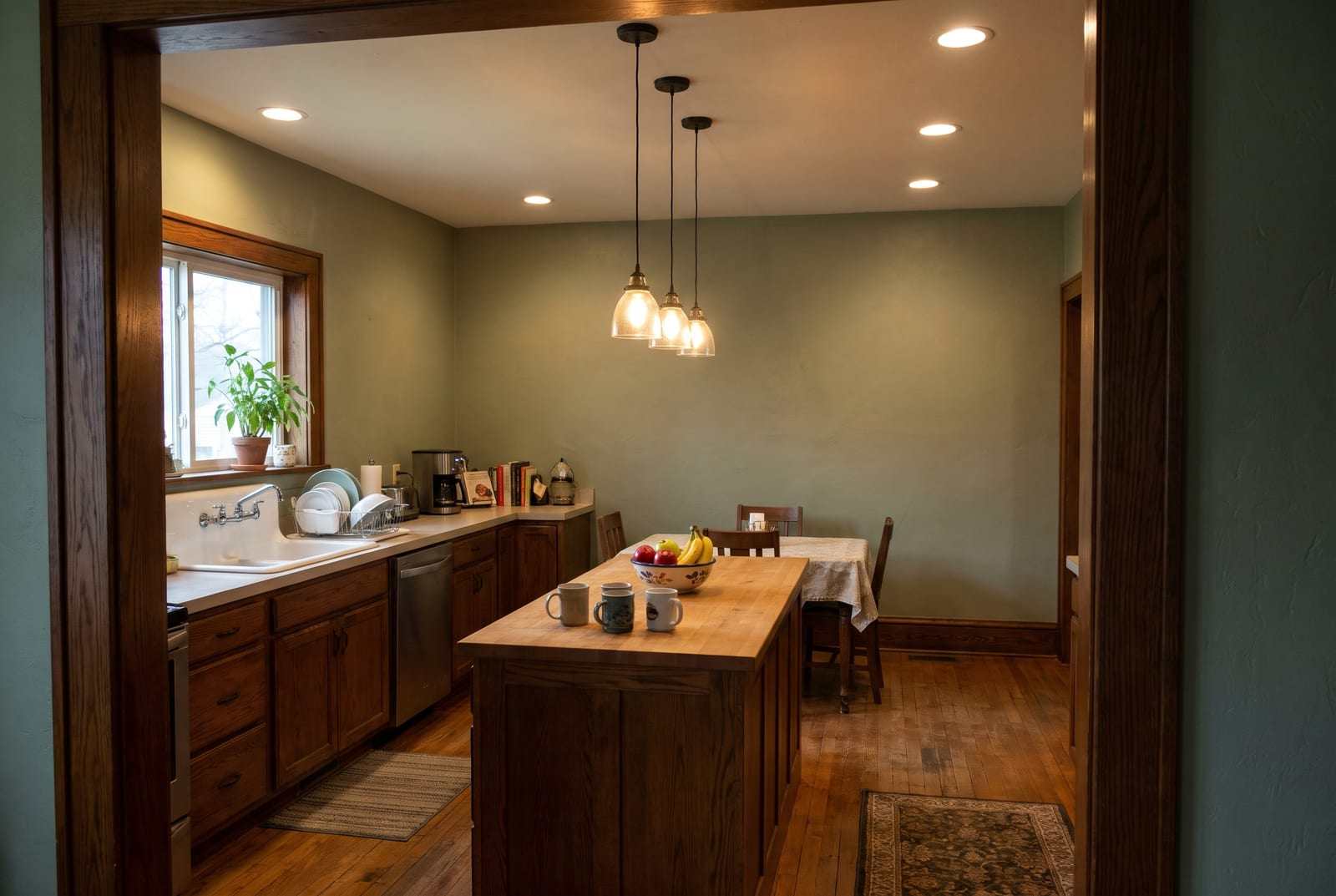
Lighting Installation in Kettering
New Fixtures, Recessed Lights and Ceiling Fans
Lighting installation covers new and replacement fixtures, recessed lighting, ceiling fans, under-cabinet lights, outdoor and security lighting, and the switches and dimmers that control them. Some of this work is a straight exchange at an existing box. Much of it is not: a new recessed layout needs a circuit and a switch plan, a fan needs a box rated to carry it, and outdoor lights need fixtures and connections made for the weather.
In each case the result should be a fixture wired to a suitable circuit, supported by the right box and controlled from a sensible place, with the wiring behind it left in good order for whoever opens the box next. Lighting for offices, shops and studios is also covered under small business services.
What Changes in an Older Ceiling
Ranch and split-level houses from the 1950s–70s, common in Kettering, were often built with few ceiling lights in living rooms and bedrooms; a wall outlet controlled by a switch did the job instead. Adding ceiling lights to those rooms means running new cable from the switch to the ceiling, which is usually possible from the attic in a ranch house and harder between the floors of a split-level. Old ceiling boxes deserve a look as well. Decades of heat from incandescent bulbs can leave the insulation on the wires inside brittle, and many new fixtures call for supply wiring rated for a higher temperature than older cable carries.
Ceiling Fans and Their Controls
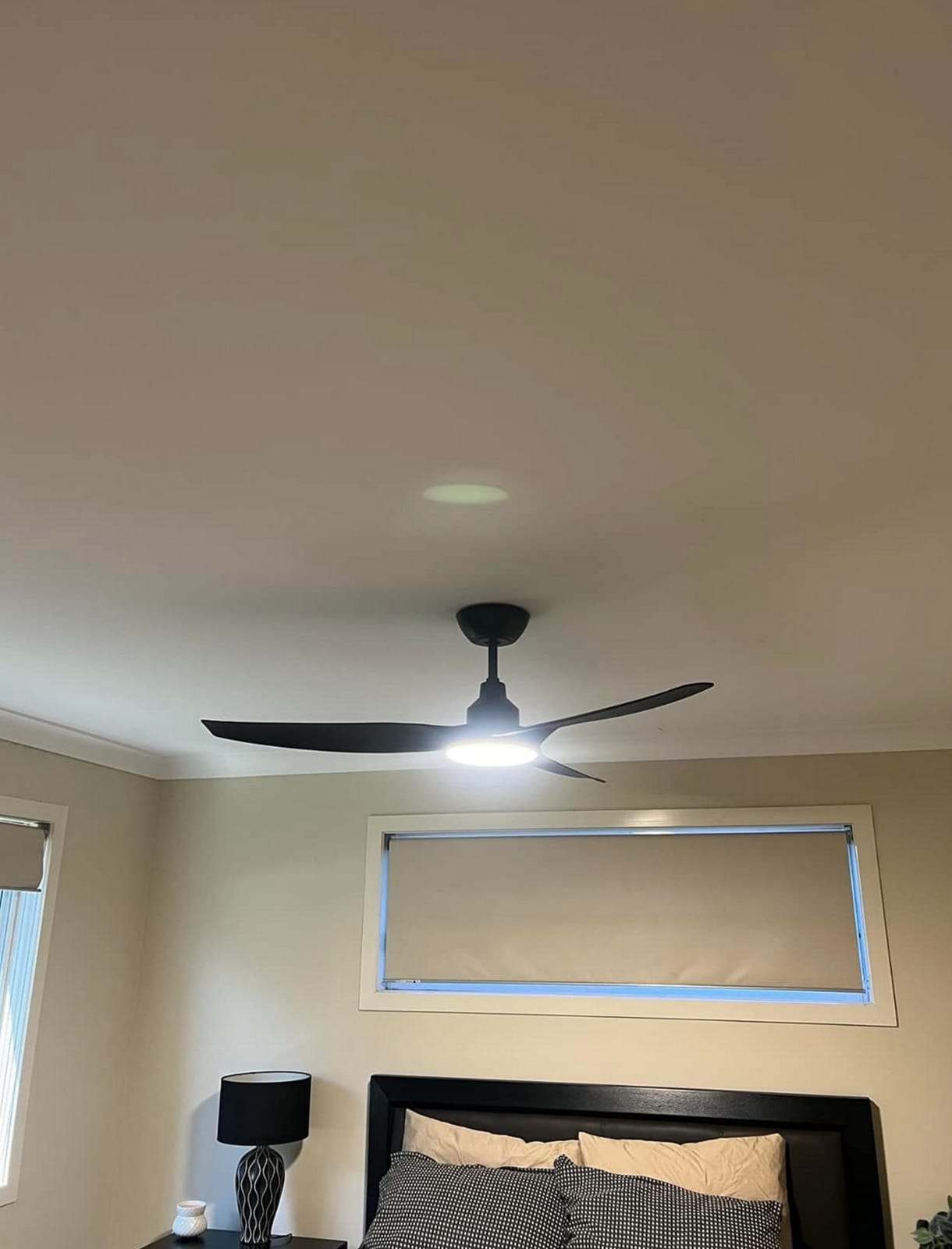
A ceiling fan weighs more than a light and moves while it runs, so it must hang from a box listed for fan support, fastened to the framing or to a brace between the joists. A standard light box screwed to drywall is not enough. Separate control of the fan and its light kit needs either an extra conductor between the switch and the ceiling or a wall control or remote made for the fan. Manufacturers generally call for the blades to sit at least seven feet above the floor, and a sloped ceiling needs the right downrod and canopy.
Planning, Wiring and Controlling New Lighting
For lighting, the questions to settle on the visit are where each fixture goes, which circuit will carry the new load, where the switches belong and how the cable will reach them through finished walls and ceilings. Each stage of a job is described under How We Work.
Lighting Projects This Service Covers
- Replacement and new ceiling and wall fixtures, including heavier pendants and chandeliers
- Recessed lighting in new layouts or added to existing ceilings
- Ceiling fans with light kits, hung from fan-rated boxes
- Under-cabinet lighting in kitchens and work areas
- Outdoor wall lanterns, path lights and lamp posts
- Security lighting with motion sensors or dusk-to-dawn controls
- Dimmers, three-way and four-way switching, and fan controls
- Track lighting for home offices, studios and display areas
Recessed Lighting
Recessed lights in an insulated ceiling must be rated for contact with insulation, and airtight housings keep heated air from leaking into the attic. Slim LED fixtures that mount without a separate housing suit many existing ceilings, since they need only a round opening and a small junction box beside it. A common starting rule spaces the lights about half the ceiling height apart, then adjusts for how the room is used, which way the joists run and what sits above the ceiling, such as ductwork or plumbing.
Under-Cabinet, Outdoor and Security Lighting
Under-cabinet lights can be hardwired to a wall switch or fed from a low-voltage driver hidden in a cabinet, and the power source is easiest to plan before a new backsplash goes up. Outdoor fixtures must be rated for damp or wet locations according to where they hang, and outdoor outlets need GFCI protection and covers that stay weatherproof with a cord plugged in. Lamp posts and path lights fed by buried cable follow burial depth rules that depend on the cable type and the circuit’s protection. Security lights add a motion sensor or a photocell, and the sensor’s aim matters more than the fixture’s brightness: set well, it lights the driveway or the door without lighting the neighbors’ windows.
Questions About Lighting, Fans and Dimmers
- Why do LED lights flicker or buzz on a dimmer?
- Many older dimmers were designed for incandescent bulbs and expect a heavier load than a few LED lamps present. The result is flicker at low settings, a hum, or lights that will not turn fully off. The fix is a dimmer rated for LED loads, matched to lamps marked as dimmable; some fixtures specify a particular type of dimming.
- Can a ceiling fan go where a light fixture is now?
- Often, yes, provided the box is listed for fan support and secured to the framing. If it is not, the box is replaced with a fan-rated box or brace. Whether the fan and its light can be switched separately depends on the cable between the switch and the ceiling.
- Do smart switches work in older homes?
- Many smart switches need a neutral wire in the switch box, and switch boxes in older homes often have none, because the cable runs to the light first and only a switched pair comes down to the switch. Some smart switches are made to work without a neutral; otherwise, a neutral has to be brought to the box.
- How many recessed lights does a room need?
- It depends on the ceiling height, the beam spread of the fixtures and how the room is used. Spacing the lights about half the ceiling height apart is a reasonable start for general lighting, with extra fixtures over work areas such as a kitchen counter or a desk.
Lighting projects often bring other work with them, such as a new outlet beside a fixture, a switch moved to a better wall or a stretch of old wiring replaced along the way. That work is described under outlets, switches and wiring.
A short note on the rooms and the fixtures in mind is enough to arrange a visit, by the request form or by phone at (937) 719-8299.