
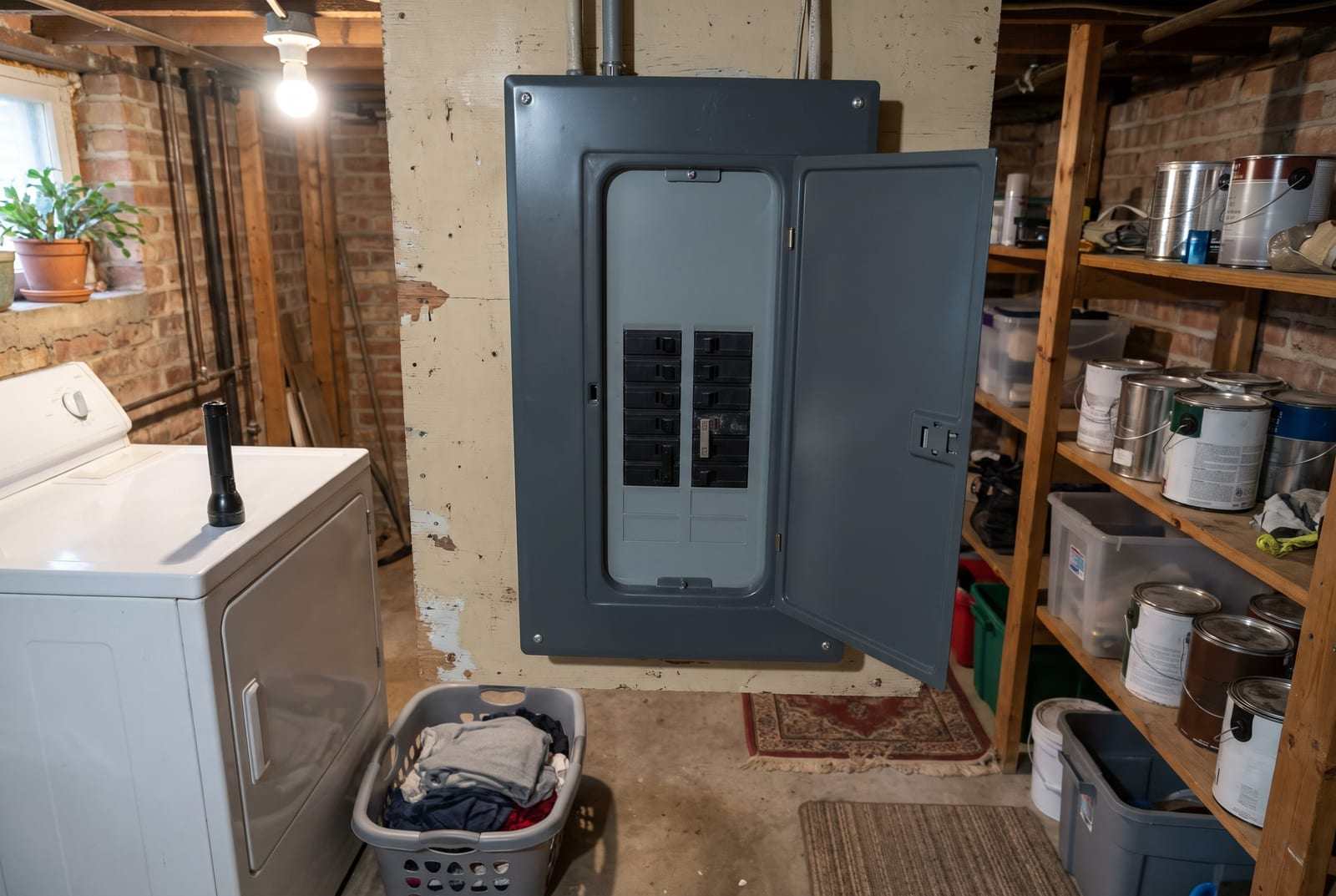
Electrical Repair and Troubleshooting in Kettering
Faults That Show Up as Flickers, Trips and Dead Circuits
Electrical repair covers the problems that appear in a working system: lights that flicker or dim, breakers that trip, outlets and whole circuits that stop working, connections that run hot, and circuits that misbehave only under certain conditions. Repair work means tracing each symptom back to its cause in the panel, the wiring or the device. Replacing a breaker that trips because of a damaged cable only moves the problem somewhere else.
Flickering and Dimming Lights
A single fixture that flickers usually has a loose lamp, a worn socket or a dimmer that does not suit its LED lamps. Flickering across a room points to a loose connection at a switch, an outlet or a splice on that circuit. When lights throughout the building flicker, or brighten in some rooms while they dim in others, the problem is more likely at the panel or the service connection. A failing neutral at that level can damage appliances, so it should be looked at quickly.
Breakers That Trip and Circuits That Go Dead
A breaker trips to protect the wire behind it. The cause may be simple overload, such as a space heater and a hair dryer on one bathroom circuit, or it may be a short circuit, a ground fault or an arc fault in damaged cable. Breakers also wear, and an old one can trip below its rating or fail to trip when it should. A dead circuit with no tripped breaker often traces to a GFCI outlet in another room that protects the outlets downstream of it, or to a connection that has failed at the last working outlet on the run.
Warm Outlets and Overheated Connections
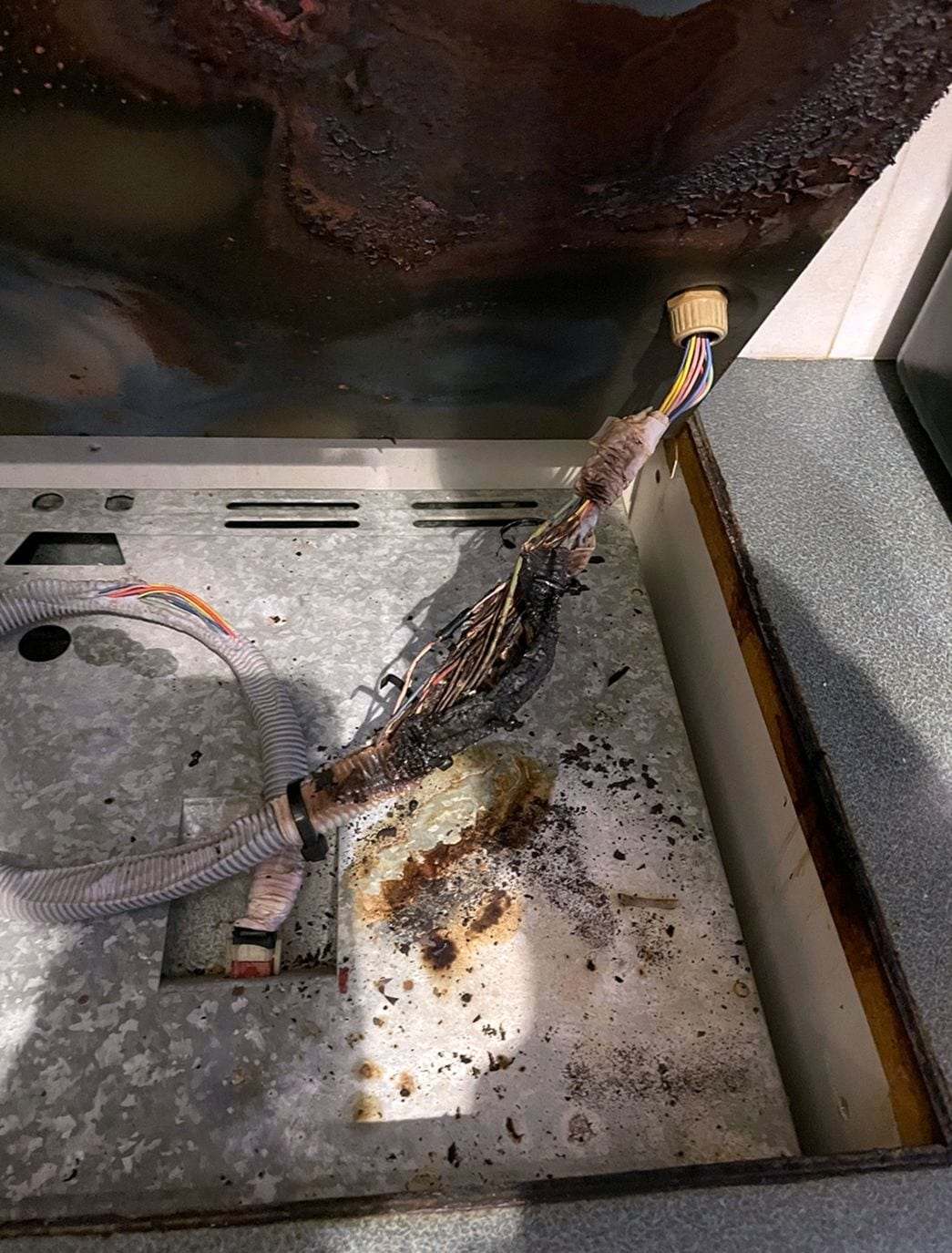
Heat at a connection is the most serious of the common faults. A terminal screw that has loosened over years of heating and cooling, a wire pushed into the back of an outlet instead of fastened under its screw, or contacts worn slack by heavy plugs all add resistance, and resistance turns current into heat. The heat darkens the plastic and makes the insulation brittle. Left alone, it can melt the connection and the cable around it, as in the scorched harness shown here. A warm cover plate, a faint smell of hot plastic or brown marks around a plug are the early signs.
The repair is to cut back to sound conductor, remake the connection properly and replace the device and any cable the heat has reached. Where older aluminum branch wiring is involved, the connections need devices and methods rated for aluminum.
Circuits That Misbehave in Wet Weather
Some faults appear only when it rains or when snow melts. Water in an outdoor outlet box, a light under an eave, a damaged underground feed or a service mast with failed seals can trip a GFCI or a breaker, then dry out and test normally the next day. Summer thunderstorms in the Kettering area add a second factor, since a nearby strike can damage devices on the same night that rain exposes a weak spot. Tracing these faults means following where the water travels and which circuits share the affected area, not only resetting the breaker that tripped.
Tracing the Fault and Making the Repair
The questions on the first call, about when the problem appears and where, shape the visit: a fault that comes and goes is traced from the panel outward along the affected circuit until the cause is found, and the repair is explained before it is made. The stages of a job are set out under How We Work.
The repair itself depends on the cause. Typical repair work includes:
- remaking loose or overheated connections at outlets, switches, fixtures and splices
- replacing worn breakers, and breakers that no longer trip or hold as they should
- replacing damaged outlets and switches, including those with scorched contacts
- adding GFCI or AFCI protection where a circuit calls for it
- replacing lengths of cable damaged by heat, water, nails or rodents
- correcting outdoor boxes, covers and feeds that let water in
Signs That Call for a Repair Visit
- Lights that flicker or dim without an obvious cause
- A breaker that trips more than occasionally, or will not reset
- Outlets or switches that are warm, discolored or loose in the wall
- Buzzing, crackling or sizzling from a switch, an outlet or the panel
- A burning smell with no clear source
- A tingle or a mild shock from an appliance, a fixture or a faucet
Symptoms, Possible Causes and Safe First Steps
The table pairs common symptoms with the causes behind them and a safe first step before the visit. None of the first steps involves opening the panel cover or a device box.
| Symptom | Possible cause | Safe first step |
|---|---|---|
| Lights flicker in several rooms | Loose connection at the panel or service, or a failing neutral | Note which rooms are affected and call |
| Breaker trips under load | Too many appliances on one circuit | Move a heater or appliance to another circuit |
| Breaker trips again at once | Short circuit or ground fault on the line | Leave it off and call right away |
| Outlets dead, breaker on | Tripped GFCI outlet elsewhere on the circuit | Test and reset the GFCI outlets nearby |
| Outlet or plate feels warm | Loose or overheated connection | Unplug everything and switch off the breaker |
| GFCI trips when it rains | Moisture in an outdoor box or feed | Leave the circuit off until it is checked |
Questions About Repairs and Electrical Safety
- Is it safe to keep resetting a breaker that trips?
- Once is reasonable. A breaker that trips again under the same load is doing its job, and one that trips again the moment it is reset is reporting a short circuit or a ground fault. Resetting it repeatedly sends current back into the fault, so it should be left off until the circuit is checked.
- Why does a GFCI outlet keep tripping?
- A GFCI trips when it senses current leaking to ground. The leak can come from moisture in an outdoor or basement box, a damaged cord, an appliance with an internal fault or, less often, a worn GFCI. Unplugging everything on the circuit and resetting it is a fair test: if it still trips with nothing plugged in, the fault is in the wiring or the device.
- Can a flickering light be a fire risk?
- A loose lamp is not. A flicker caused by a loose connection is, because a poor connection arcs and heats each time it flickers. Flickering in more than one fixture, or flickering that comes with buzzing, warmth or a smell, should be looked at rather than lived with.
- Should a burnt outlet simply be replaced?
- Replacing the device alone often leaves the cause behind. The heat usually comes from a loose connection or an overloaded circuit, and it can damage the insulation of the wires behind the outlet. A proper repair cuts back to sound conductor, checks the circuit’s load and breaker size, and replaces any cable the heat has reached.
Breakers that trip because the panel or the service is simply too small for the building’s loads are a capacity problem rather than a fault, and the answer is described under panel and service upgrades. Worn outlets and switches found during a repair are covered with outlets, switches and wiring.
A short description of the symptom is enough to arrange a visit, by the request form or by phone at (937) 719-8299.