
Questions About Electrical Work
The answers below cover the questions that come up most often about electrical problems, panels, outlets, chargers and permits in homes and small businesses. They explain how the trade generally handles each situation. The specifics of a given building are settled when its panel and wiring are seen in person.
Warning Signs and Safety
- Which electrical problems should not wait?
- Heat, smell and sparks: an outlet or switch plate that is warm to the touch, a burning or hot-plastic smell, scorch marks, visible sparking, or a breaker that trips again the moment it is reset. The safest step is to switch the affected circuit off at the panel, leave it off and call.
- Why do lights flicker?
- A loose lamp or a worn switch is the simplest cause. Flicker across several rooms, or lights that dim sharply when a large appliance starts, can point to a loose connection in the panel, an overloaded circuit or a problem at the service connection, and those deserve a closer look.
- Is it safe to keep resetting a breaker that trips?
- Once, after unplugging what was running, is reasonable. A breaker that trips repeatedly is doing its job: it is reporting an overload, a short circuit or, for GFCI and AFCI breakers, a ground fault or an arc. Resetting it over and over, or replacing it with a larger breaker, removes the protection without fixing the cause.
- Why would a circuit trip during wet weather?
- Water finds its way into outdoor outlets, exterior light fixtures, buried cable splices and junction boxes, and a GFCI trips when moisture lets current leak to ground. The fault can sit some distance from the outlet that trips, which is why wet-weather problems often take tracing across several boxes.
- Can a warm outlet be used until someone looks at it?
- No. Warmth at an outlet usually means a loose or failing connection producing heat at its terminals, and the heat makes the connection worse over time. Unplug everything from it, switch the circuit off at the panel if it can be identified and leave it off.
Faults, dead circuits and breakers that will not stay on are covered under electrical repair and troubleshooting.
Panels and Circuits
- How can the size of an electrical service be found?
- The main breaker at the top of the panel is usually marked with its rating, commonly 100, 150 or 200 amps, and 60 amps in some older houses. The panel’s label lists the largest rating the panel itself can take. A house with no main breaker, or with several separate disconnects, needs a closer look.
- What are the signs that a panel needs replacing?
- Breakers that trip under normal use or will not stay reset, breakers that are warm or discolored, rust or water inside the panel, and a panel with every space filled. A panel can also reach its limit when the building adds major loads such as a car charger, a heat pump or an electric range.
- What does a service upgrade involve?
- A larger service usually means a new panel, new service entrance conductors and often a new meter base, coordinated with the electric utility, which disconnects and reconnects the supply. A permit and an inspection are generally required, and the existing circuits are moved to the new panel and labeled.
- What is whole-house surge protection?
- A surge protective device mounted at the panel limits voltage spikes from lightning and utility switching before they reach the branch circuits. Summer thunderstorms are the usual source of damaging surges in the Kettering area. The device works alongside plug-in surge strips for sensitive electronics, not in place of them, and it depends on a sound grounding system.
- Can a portable generator be connected to the house panel?
- Only through a transfer switch, or a listed interlock with a generator inlet, which keeps the generator from feeding power back into the utility lines. Back-feeding through a dryer outlet with a double-ended cord endangers line workers and the house itself.
Service sizes, breakers and related panel work are explained under panel and service upgrades.
Outlets, Switches and Lighting
- What is the difference between a GFCI and an AFCI?
- A GFCI (ground-fault circuit interrupter) cuts power when current leaks to ground through water or a person, protecting against shock. An AFCI (arc-fault circuit interrupter) detects the arcing of damaged cords and loose connections, protecting against fire. Dual-function devices provide both.
- Why does a switch buzz or feel warm?
- Dimmers hum faintly and run warm in normal use, more so with lamps they were not designed for, and a dimmer rated for LED loads usually cures hum and flicker with LED bulbs. A standard switch that buzzes, crackles or feels hot usually has a loose terminal or a worn contact and should be replaced.
- Can a ceiling fan go where a light fixture is now?
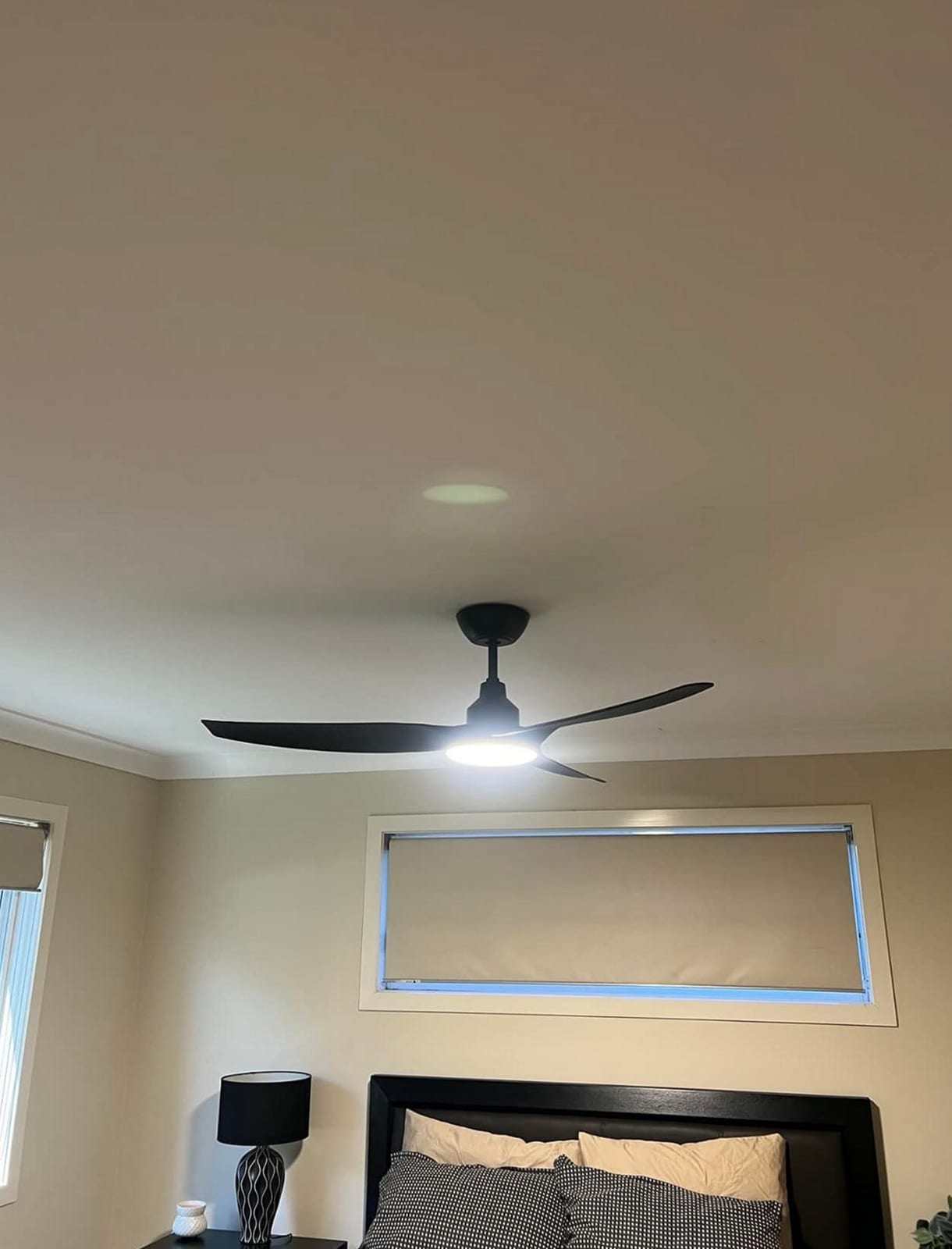
- Often, provided the ceiling box is rated to support a fan; many light-fixture boxes are not. Fitting a fan-rated box or brace is part of the job, and separate switches for the fan and its light may need an extra conductor between the switch and the ceiling.
- Are tamper-resistant outlets required?
- Yes, for new and replaced outlets in homes under current code. Internal shutters open only when both prongs enter at once, which keeps keys and hairpins out of the slots. They are marked “TR” on the face.
- Can recessed lights go in a ceiling below an insulated attic?
- Yes, with fixtures rated IC for contact with insulation and, in most cases, airtight housings that limit warm air leaking into the attic. Slim LED fixtures that mount in the ceiling opening avoid a large housing where joist space is tight; recessed lighting is covered in more depth under lighting installation.
Device types, GFCI protection and older wiring are set out under outlets, switches and wiring.
EV Chargers
- Does every electric vehicle need a Level 2 charger?
- No. A Level 1 cord on a dedicated 120-volt outlet adds roughly 3–5 miles of range per hour, which suits modest daily driving. Level 2 suits longer commutes, larger vehicles and households with two electric vehicles.
- What size circuit does a Level 2 charger need?
- The circuit is sized at 125 percent of the charger’s continuous draw: a 32-amp charger on a 40-amp circuit, a 40-amp charger on a 50-amp circuit and a 48-amp charger on a 60-amp circuit. The vehicle’s onboard charger sets the useful maximum.
- Will a charger overload the panel?
- That depends on the service size and the existing load. A load calculation answers it; where capacity is short, a smaller circuit, a load-management device or a service upgrade are the usual options.
- Can the charger go in the driveway rather than the garage?
- Yes, with equipment rated for outdoor use, a post or exterior wall to mount it on and, for a run across open ground, buried conduit. The route from the panel matters more than the location itself.
Charger planning, with a sizing guide for panel, circuit and distance, is covered under EV charger installation.
Permits and Inspections
- Which electrical jobs need a permit?
- New circuits, service upgrades, panel replacements, generator transfer equipment and most added wiring usually need a permit; replacing a device with the same type on an existing circuit often does not. The building department that covers the address sets the rule.
- What does an electrical inspector check?
- That the work meets the adopted edition of the National Electrical Code: wire and breaker sizes, box fill, grounding and bonding, GFCI and AFCI protection, smoke alarm placement and panel labeling. A rough-in inspection takes place before walls are closed and a final inspection once the work is complete.
- Does old wiring have to be updated when new work is done?
- Existing wiring that met the code when it was installed may generally stay unless it is hazardous. New work must meet the current code, and some changes, such as extending a circuit, bring current protection requirements with them.
- Why does the code edition matter?
- Ohio adopts a specific edition of the National Electrical Code through its building codes, and requirements change from one edition to the next, for example where GFCI and AFCI protection is required. The edition in force when the permit is issued governs the work.
The order of a job, from the first call to the inspection, is set out under How We Work.
Preparing for a Visit
- What information helps on the first call?
- A description of the problem and when it started, the rooms or circuits affected, whether a breaker has tripped and whether it resets, and the approximate age of the building. The office asks about the problem, the age of the building and where the trouble shows up, and then sets a time.
- What happens during the visit?
- Hugo Kim, the owner, looks at the panel, the wiring and the area in question. He goes over what he found and lays out the work before any of it begins.
- Does anything need to be done before the visit?
- Clear access to the panel and to the affected outlets, fixtures or appliances helps the assessment. A circuit that is warm, smells of burning or trips at once should be left switched off until then.
- Which communities are served?
- Kettering and the neighboring communities of Oakwood, Centerville, Moraine, Beavercreek and southern Dayton. If an address sits just outside those towns, call and ask.
- How is the office reached?
- By phone at (937) 719-8299, every day of the week, with the hours listed at the foot of each page; requests can also be sent by email to manager@delcoparkelectric.com or through the request form.
A question not answered here can be raised on the first call. The request page takes the details of the problem and where it shows up.