

Outlets, Switches and Wiring
Outlets, Switches and the Circuits Behind Them
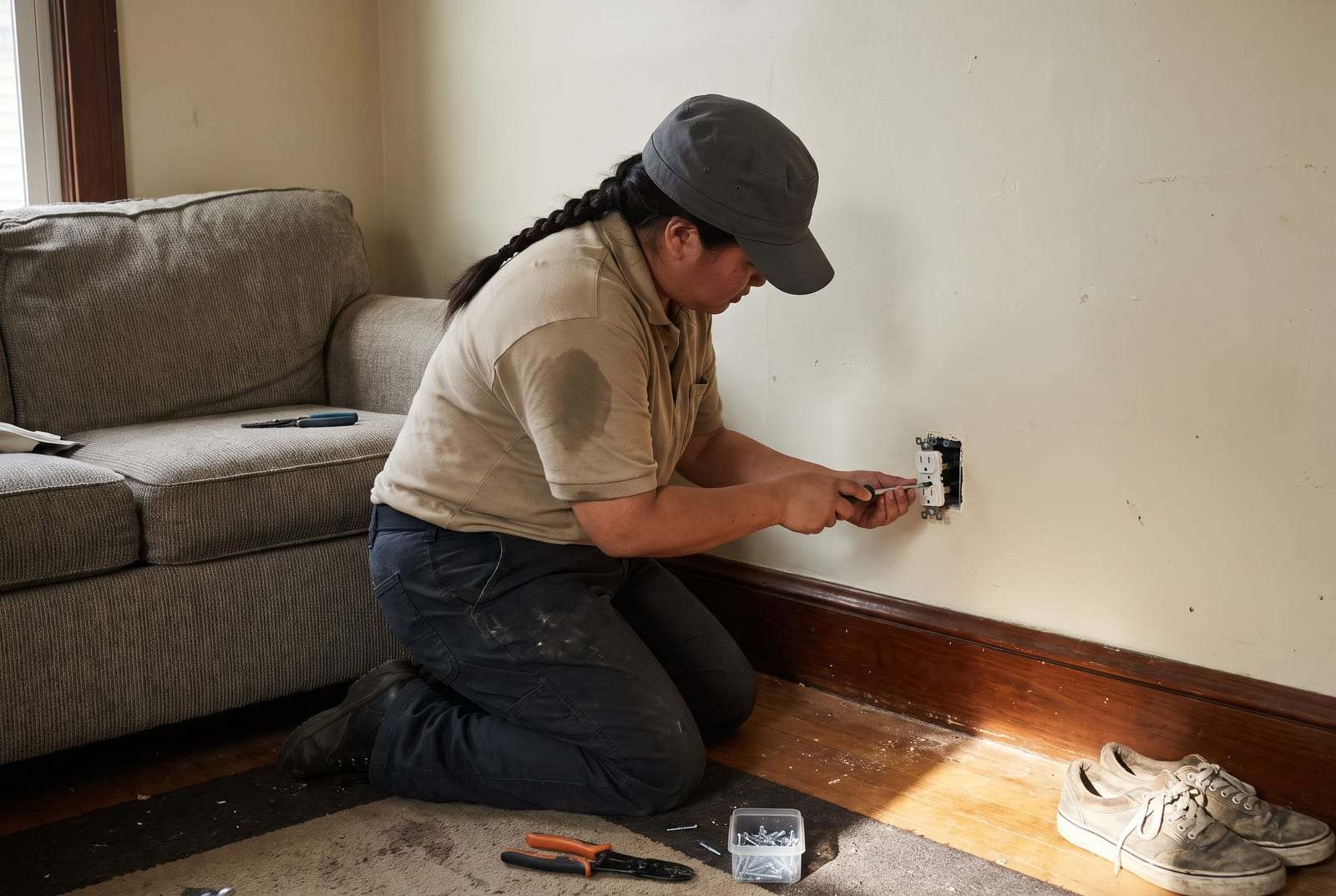
Delco Park Electric repairs, replaces and adds outlets and switches, and rewires circuits that have outlived their insulation, for homes and small businesses in Kettering and the neighboring communities. Most of this work starts with one symptom: an outlet that has stopped working, a switch that buzzes or feels warm, a plug that falls out of a worn receptacle. The cause is often a loose or overheated connection behind the cover plate.
A replacement device has to match its circuit: a 20-amp outlet belongs on a 20-amp circuit wired with 12-gauge copper. Outlets in bathrooms, kitchens, garages, basements and outdoors need ground-fault protection, and bedrooms and living areas call for arc-fault protection when circuits are added or extended.
Work Covered by This Service
- Repair and replacement of loose, cracked, warm or scorched outlets and switches
- New outlets and dedicated circuits for appliances, workbenches and offices
- GFCI and AFCI protection, at the outlet or at the breaker
- Three-way and four-way switching, dimmers and relocated switches
- 240-volt outlets for ranges, dryers and shop equipment
- Rewiring of cloth-insulated, ungrounded or aluminum branch circuits
- Hardwired smoke detector wiring and interconnection
Problems that start at the panel, such as a breaker that trips again as soon as it is reset, belong with electrical repair and troubleshooting.
Older Wiring and What It Changes
Many Kettering ranch and split-level houses from the 1950s and 1960s still carry original wiring: two-prong outlets with no ground, cloth-jacketed cable along the basement ceiling, and circuits that later owners extended. None of that is automatically unsafe, but it changes the job. A three-prong outlet cannot simply replace a two-prong one, and an old box may be too small for a GFCI. In houses like these, the visit starts at the panel and follows the circuit in question, because what an earlier owner changed is usually found along the way.
Matching Each Outlet and Switch to Its Location
The right device depends on the room, the circuit and what will be plugged in. The table sets out the types found in most homes and small shops. Light fixtures, recessed lighting and ceiling fans are covered under lighting installation.
| Type | Where it is used | Notes |
|---|---|---|
| Standard duplex | Most rooms | Rated 15 or 20 amps; the 20-amp version has a T-shaped slot |
| GFCI | Bathrooms, kitchen counters, garages, basements and outdoors | Trips at a leak of about 5 milliamps; can protect the outlets wired after it |
| AFCI or dual-function | Bedrooms and living areas on new or extended circuits | Detects arcing from damaged cords and loose connections; dual-function adds GFCI |
| Tamper-resistant | New and replaced outlets in homes | Shutters open only when both prongs enter together; marked “TR” |
| USB combination | Kitchens, bedrooms and desks | Fits a standard box; the ports share the outlet’s circuit |
| 240-volt appliance | Ranges, dryers and shop equipment | Newer outlets have four wires with a separate ground; older ones have three |
| Three-way and four-way switches | Stairways, halls and rooms with two doors | Control one light from two or more places |
| Dimmer | Dining rooms, bedrooms and recessed lighting | LED lamps need a dimmer rated for LED loads |
Signs Wiring Needs Attention
- An outlet, switch or cover plate that is warm to the touch
- Scorch marks, melted plastic or brown discoloration around a device
- Buzzing, crackling or a faint burning smell from a switch or outlet
- Plugs that slip out of a worn outlet
- Lights that flicker when a switch is touched
- Outlets that stopped working with no tripped breaker
- Extension cords used as permanent wiring
Heat, a burning smell and scorch marks should not wait: the circuit is best switched off at the panel and left off until the cause is found.
Smoke Detector Wiring
Hardwired smoke alarms run on a 120-volt circuit with battery backup and are interconnected, so an alarm in the basement sounds every alarm in the house. The residential code calls for them inside each bedroom, outside each sleeping area and on every level, with carbon monoxide alarms near sleeping areas in homes with fuel-burning appliances or an attached garage. Smoke alarms are generally replaced ten years after the manufacture date printed on each unit. Where an older house has no interconnect wire and a new cable run is impractical, alarms that interconnect wirelessly are an accepted alternative.
When the Panel Sets the Limit
Every new circuit needs an open space in the panel and spare capacity in the service. A full panel, or a small service already carrying electric cooking and drying, may not take another 240-volt outlet without changes, which are set out under panel and service upgrades.
GFCI Outlets and Older Wiring Explained
These answers describe how the trade and the electrical code generally treat each situation; the condition of a particular circuit is settled by opening its boxes and testing it.
- Can a two-prong outlet be replaced with a three-prong outlet?
- Only when a ground is available, through metal conduit, armored cable or a new grounding conductor. Without one, the code allows another two-prong outlet, a GFCI outlet marked “No Equipment Ground,” or a three-prong outlet protected by a GFCI ahead of it and marked the same way. A GFCI protects people from shock but does not give electronics a ground.
- Why are several outlets dead when no breaker has tripped?
- A GFCI in a bathroom, garage, basement or outdoors often protects other outlets wired after it, sometimes in another room. Pressing the reset button on each GFCI is the first check. If that does not restore power, a loose connection in one of the boxes is the usual cause, and the circuit is best left off until it is traced.
- Why does a GFCI outlet keep tripping?
- Moisture in an outdoor or garage outlet, a worn appliance cord or a GFCI at the end of its life are the usual causes. One that trips the moment it is reset with nothing plugged in points to a wiring fault on the circuit it protects.
- Does cloth-insulated wiring have to be replaced?
- Not automatically. Cloth-jacketed cable with rubber insulation was standard into the early 1960s, and much of it is still in service. The rubber hardens with age and heat and can crumble inside fixture and outlet boxes. Whether a circuit can stay, needs repairs at its ends or should be rewired is judged by opening its boxes.
- Is aluminum branch wiring a hazard?
- Solid aluminum branch wiring, installed in some homes from the mid-1960s to the early 1970s, carries current safely, but its connections at outlets and switches tend to loosen and overheat. Accepted remedies are devices rated CO/ALR, copper pigtails joined with connectors listed for aluminum-to-copper splices, or new circuits.
Arranging Outlet and Wiring Work
A dead outlet, a warm switch or a circuit of cloth-insulated cable starts with a call to (937) 719-8299 or a request sent through the site. The office asks a few questions about the problem, the age of the building and where the trouble shows up, and then sets a time.